

You did nothing wrong. A phone number is only ten digits, and the people behind spam calls do not need your name, your consent or even a list to reach it. In the past 30 days alone, people filed 126,764 complaints about unwanted calls and texts that are now in our records, against 58,536 different numbers.
Below are the real reasons the calls start, why they come in bursts, and what makes them slow down.
How your number got on a list
Often it is not on a list at all. Dialling software can call every number in a block, one after another, at almost no cost. A new number, or one you have never given to anyone, still gets calls for this reason.
Where a list is involved, it is usually one of these:
- Lead lists. Numbers collected from web forms, quotes and sign-ups are sold on, sometimes many times.
- Recycled numbers. Your number had an owner before you. Their debts, subscriptions and enquiries can follow the number.
- Public places. A number on a business page, a classified ad or a social profile is easy to collect.
Answering or calling back marks your number as live
A dialling machine records which numbers ring out, which are disconnected and which are picked up. A number that answers is worth more than one that does not, and it is called again.
The same goes for pressing a key. A recording that says "press 2 to be removed" is not an opt-out. The US communications regulator's advice is to hang up without pressing anything, because the prompt is a way to find numbers that respond.
Calling back has the same effect, and can cost money as well. See what happens if you answer a spam call, or call one back.
Forms, sweepstakes and data breaches
Three everyday things put a number into circulation:
- Forms with small print. Insurance quotes, loan comparisons and "free" estimates often include consent to be contacted by "partners". One form can mean calls from dozens of companies.
- Prize draws and surveys. Many exist mainly to collect phone numbers.
- Data breaches. When a company you deal with is breached, phone numbers are among the first things to be traded.
A burst of calls a few days after you filled in a form is rarely a coincidence.
Why the calls come in waves
Spam calling is run as campaigns. One operation dials millions of numbers for a few days or weeks, then moves to new numbers when carriers start blocking the old ones. From your side it looks like a quiet month followed by ten calls in a week.
Our records show the same pattern. The most reported number of the past month drew more complaints in 30 days than most numbers collect in years. You can see the current ones on the list of most reported scam phone numbers.
Seasons matter too. Calls about health plans rise during enrolment periods, calls about taxes rise in spring, and calls about deliveries rise before the holidays.
Why they look local
A call from your own area code, sometimes with the same first three digits as your number, is more likely to be answered. Callers know this and fake the number on your screen to match. This is called neighbor spoofing.
The number shown may belong to a real person nearby who has no idea it is being used. That is why a complaint about a number is a reason for caution, not proof against its owner. More on this in phone number spoofing.
When they call: the busiest hours in our records
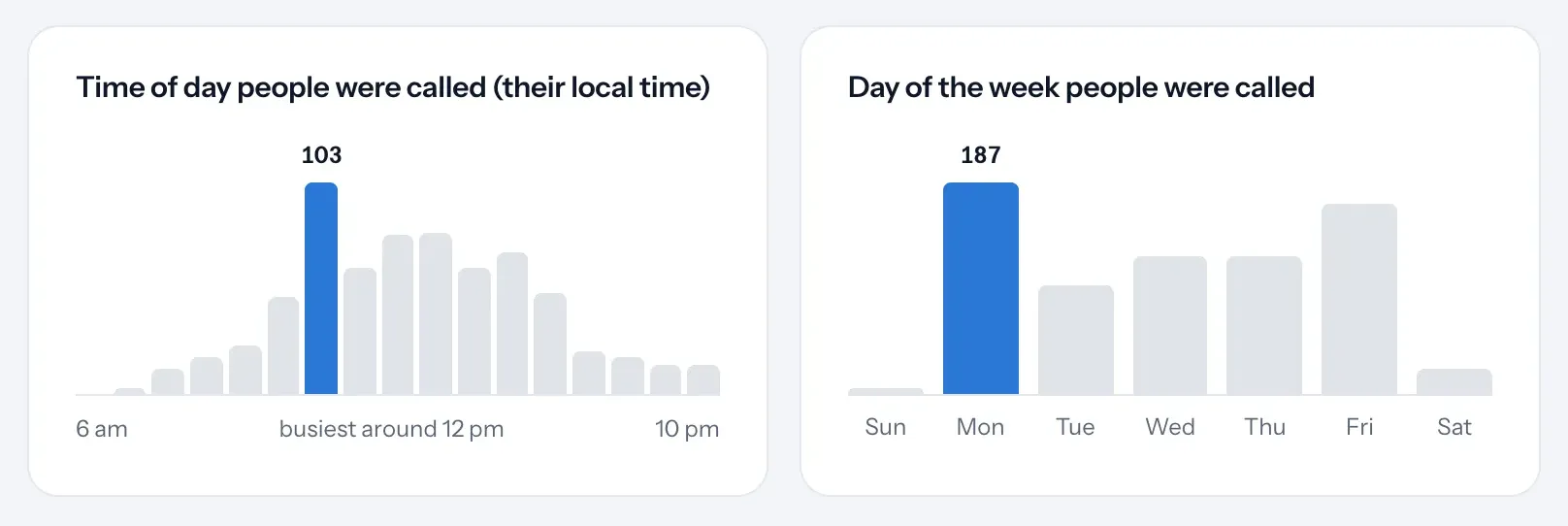
Spam calls follow office hours. In the complaints we hold from the past year, the busiest hour is around 12 pm, in the local time of the person called. Calls are rare at night and thin out at weekends.
One heavily reported number shows the pattern clearly. These are the hours and the weekdays people said it called them:
48% of the complaints on record are about recorded messages, not live callers. A machine does the dialling and a person only joins if you respond.
How to make them slow down
Nothing stops every call, but these steps cut the number that reach you:
- Let unknown numbers go to voicemail. A real caller leaves a message. A number that never answers is worth less to a dialler.
- Never press a key, say "yes" or call back. Hang up instead.
- Turn on your carrier's free spam filter and your phone's own. The steps for each are in how to stop spam calls.
- Read the small print on forms. Untick consent to contact from partners, or leave the phone field empty when it is optional.
- Report the number. Reports are what carriers and regulators use to block campaigns. You can report a number on its page here in two clicks.
- Check before you call back. Look up the number to see whether others have reported it.
If the calls started after you gave your number to one company, ask that company directly to stop and to tell you who it shared the number with.